Government Funded Training Programs: 10 Options for 2026
Capstone · November 18, 2026
A practical guide to government funded training programs, who qualifies, and how to check eligibility with your local workforce board before you enroll.
Who decides whether your training gets paid for?
The federal government writes the rules and sends the money. It rarely decides your case. In nearly every program below, the decision is made locally by a workforce board, a state agency, a community grantee, or an American Job Center counselor working from a spending plan written months before you walked through the door. That's the part most program lists skip, and it's the part that determines whether funding shows up before the next class start.
Eligibility is never automatic, and approval of a program doesn't guarantee you a seat, a schedule you can attend, or money still in the pot when your paperwork clears. The options below are grouped by who they're built for, so skip the ones that don't match your situation. If you're unsure, start at the American Job Center entry point, then move to the age-banded programs (Job Corps, YouthBuild, SCSEP), the population-specific ones (SNAP E&T, INAP, NFJP), the earned-benefit route (VR&E), the earn-while-you-learn model (Registered Apprenticeship), or the preparation software that gets you exam-ready while you wait.
Table of Contents
- 1. Capstone Workforce
- 2. American Job Centers and WIOA Adult & Dislocated Worker Programs
- 3. Job Corps
- 4. Registered Apprenticeship
- 5. SNAP Employment and Training (SNAP E&T)
- 6. YouthBuild
- 7. Senior Community Service Employment Program (SCSEP)
- 8. Veteran Readiness and Employment (VR&E)
- 9. Indian and Native American Programs (INAP)
- 10. National Farmworker Jobs Program (NFJP)
- 10 Government Funded Training Programs at a Glance
- Your Next Step Is to Verify Eligibility Before You Spend a Dollar
1. Capstone Workforce
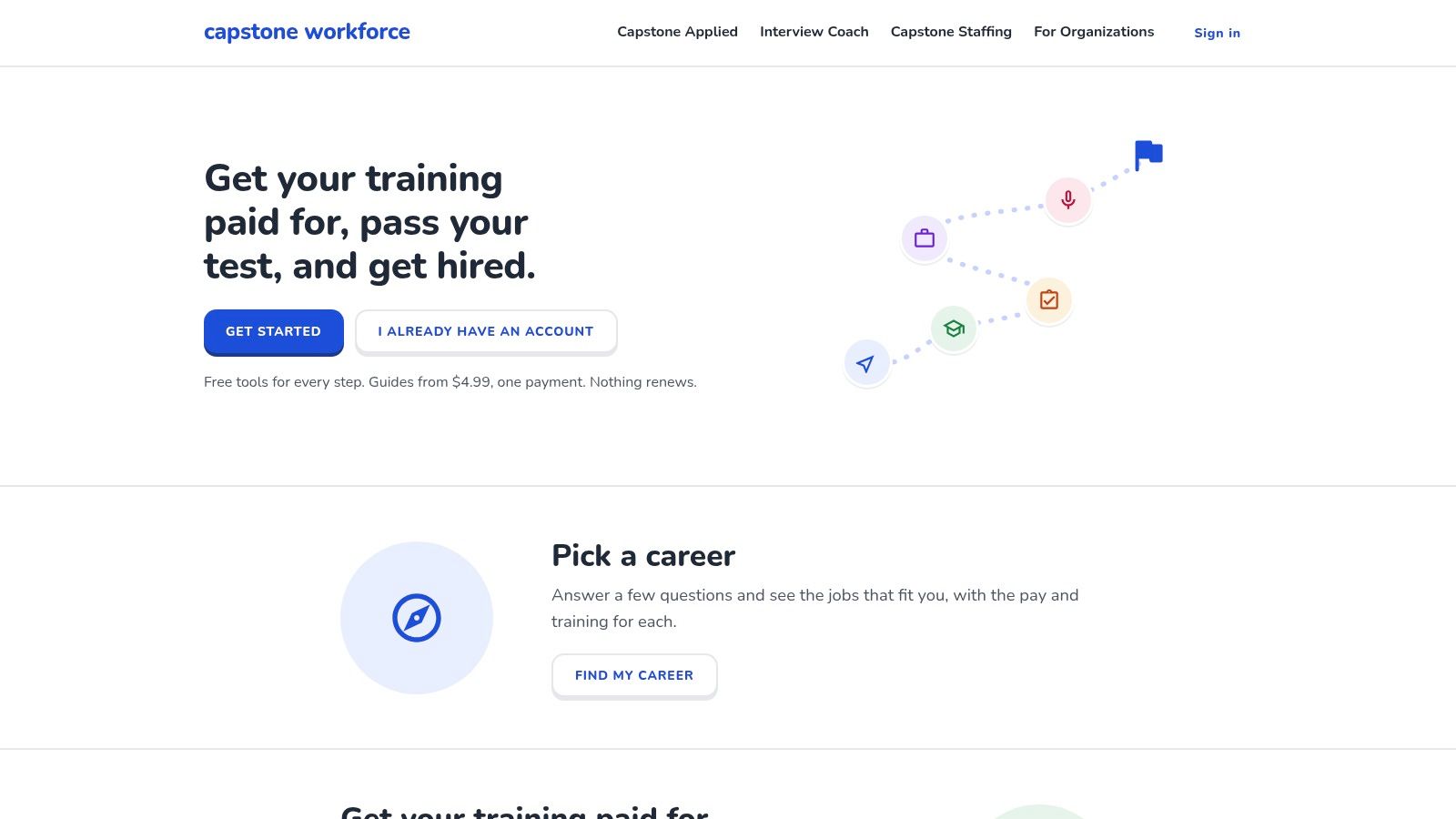
Most tools in a funding search stop at one step. Capstone Workforce is built for the whole runway: work out which job you want, find out what training it takes and who pays for it, rehearse the credential exam, apply for the job, then practice the interview. It runs alongside the workforce system rather than inside it, and the company is explicit that local boards, not software, make eligibility and funding decisions.
The funding side is where the process starts. Its WIOA guides walk through eligibility, American Job Center intake, and application steps, and every figure is checked against a federal, state, or local workforce board document before it goes on a page, with sources and update dates printed on the guide itself and founder Shawn Gregoire reviewing each one. For someone who has been told to "look into WIOA" and nothing else, that's the missing map.
Scored practice and the reporting side
Certification prep pairs written practice tests with step-by-step practical skills exercises across CNA, CDL, and phlebotomy. Capstone Applied finds nearby openings, tailors a resume to each position, and fills in application details for you to review and submit, with the first application free. Interview Coach runs spoken practice against a specific job description and scores clarity, pacing, filler words, and answer content.
- For job seekers: free tools, plus guides from $4.99 as a one-time purchase with no renewal.
- For programs: cohort packs start from $4,500, with mock interviews, readiness dashboards, at-risk alerts, funder reports, and a WIOA compliance module that continuously calculates the six performance indicators the Department of Labor tracks: second-quarter employment, median earnings, fourth-quarter employment, credential attainment, measurable skill gains, and effectiveness in serving employers.
- For small employers: role-specific onboarding, promotion-interview, and manager-conversation practice for teams of 5 to 200.
The company reports NPower completed 245 rubric-scored mock interviews in nine weeks without adding coaching staff, and its tools are used in programs run by VetsInTech, NPower, and the City of Alexandria Workforce Board. The main limit is scope: Capstone doesn't determine eligibility, doesn't run labor exchange, and doesn't submit state reports, so treat it as preparation, not approval.
Website: Capstone Workforce
2. American Job Centers and WIOA Adult & Dislocated Worker Programs
This is the front door, and many people walk past it looking for a program name.
American Job Centers are the local storefront for career services and the delivery point for WIOA Adult and Dislocated Worker funding. Adult services cover people 18 and older. Dislocated Worker funds target people who lost a job through no fault of their own. Both can pay for approved occupational training, and neither guarantees it.
The money is real. The training seat is not automatic. In program year 2023 the WIOA Adult Activities program distributed roughly $881 million in grants to states, about 43% of participants received training (roughly 120,000 people), average training expenditure ran near $2,400 per training participant, and of combined career services and training spending about 60% went to career services and 40% to training, according to the Congressional Research Service report on WIOA. That 60/40 split is the part to internalize: expect a job-search workshop before anyone offers tuition.
Ask this at intake: "Is the program I want on the current Eligible Training Provider List, and what will you approve in writing?"
Dislocated Worker funding behaves differently state to state, and the training share stays small there too. The Department of Labor national performance summary counted 187,108 dislocated workers served in program year 2024, with 37,119 receiving training.
The order of operations decides more than eligibility does: book intake, request the provider list, confirm your course sits on it, then ask when the next funding decision is made. Read how to apply for WIOA before the appointment so you arrive with the right questions. Provider lists tilt toward short, license-linked courses built to end in a credential. To see how compressed that format can get, browse no-cost MLO training online, then hold whatever you are considering against your target occupation's stated requirements before you spend a training slot on it. Until approval is in writing, treat it as a lead rather than funding.
3. Job Corps
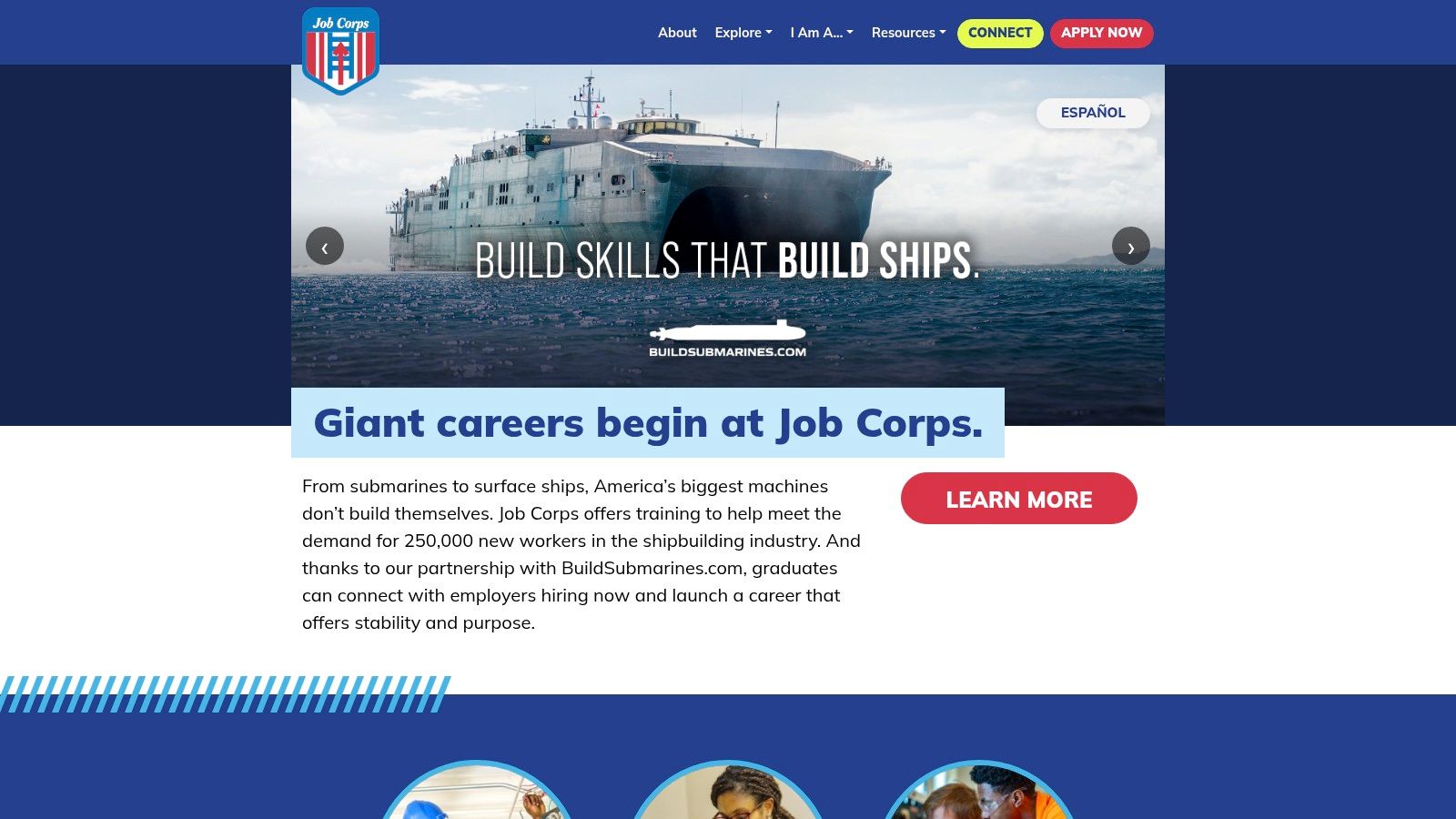
Job Corps is the one option here where "free" means free for the student. It's a federally funded education and career technical training program for eligible young people, generally ages 16 to 24, delivered on center campuses with academic instruction running alongside trade training.
That combination is why it works for people who need structure, a schedule, and a skill at the same time. Career preparation and transition support are built into the program rather than sold separately, and eligible students pay no tuition.
Where it goes sideways
The age window is the first filter, and it excludes most displaced workers. The second is inventory. The center nearest you may not run the trade you want, and enrollment timing depends on that center. Students generally attend in person on the center's schedule, which is a poor fit for someone with caregiving responsibilities at home.
- Check trade availability first. Ask which career technical programs have open slots at the specific center, not on the national list.
- Ask about the transition phase. Job placement support varies by center, so ask what happens in the final months.
- Confirm the cost in writing. Participation is free for eligible students, but ask which personal expenses the center does and doesn't cover.
Call the center directly rather than the national line. Five minutes on open trades saves a wasted application cycle.
4. Registered Apprenticeship
The fastest way to spot a real apprenticeship is to ask who signs your paycheck. A sponsor or employer hires you, pairs you with experienced workers, schedules the related classroom instruction, and raises your wage on a set progression as skills are signed off.
The credential is the payoff. On the Department of Labor WIOA performance page, the most recent reporting shows credential attainment of 73.6% for Adult participants, 75.1% for Dislocated Workers, and 62.0% for Youth. A completed registered apprenticeship ends in a portable, industry-recognized credential, which carries more weight with employers than a certificate of attendance.
What to ask a sponsor before you sign
- Is it registered? Confirm the occupation is a registered apprenticeship, not an informal "apprenticeship-style" job.
- What's the wage progression? Ask for the scheduled increases in writing, not a verbal promise.
- Who pays for classroom hours? Related instruction is often employer-paid, but confirm it.
- What can the local board fund? A WIOA plan may help around the edges, but the local workforce board makes the eligibility and funding decision.
Screening is the main hurdle. A sponsor is committing payroll, training time, and supervision before you are fully productive, so apply to several sponsors and treat the interview like a job interview, because it is one. If you need paid hours sooner, weigh that against entry-level driving careers in Minnesota, where company-funded training can start faster but follows a narrower path. Capstone Workforce's guide to where WIOA funding and Registered Apprenticeship overlap lays out which pieces a local program may support and which decisions remain with the board.
5. SNAP Employment and Training (SNAP E&T)
Cost is the barrier everyone talks about. It's rarely the one that stops people.
The OECD's work on barriers to adult training found that one in four adults hit a barrier to learning in the previous 12 months, and that time squeezed by work or family responsibilities was the most common obstacle. Among adults reporting barriers, time constraints accounted for about 48% of the obstacles, against 13% citing cost. A free course at 9 a.m. on a Tuesday is still out of reach if you're on shift.
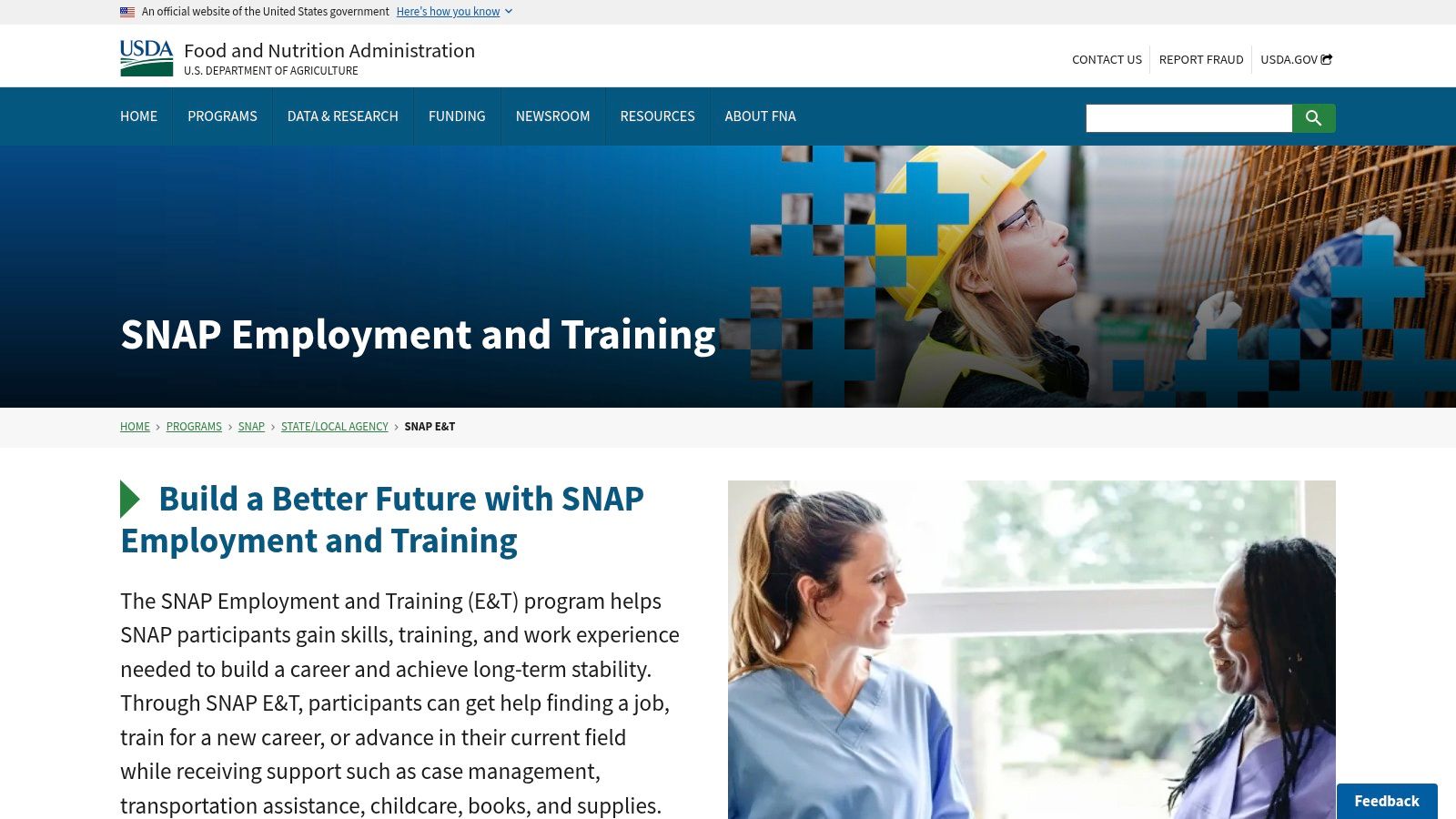
SNAP E&T takes that seriously. It connects people receiving SNAP benefits to employment services, skills training, and work experience, and it can pay for the things that block attendance: case management, transportation, childcare, books, and supplies. States and local agencies decide which components run, so the offer differs from one state to the next.
What this looks like in practice:
- Screen first. You have to meet SNAP requirements, so start with your SNAP caseworker and ask specifically about E&T.
- Ask what's reimbursable. Transportation and childcare support is the difference between enrolling and finishing.
- Ask which training slots exist now. Some states run occupational training directly; others contract with community colleges.
Don't skip this because it's a food program. The supportive services attached to it are often worth more than the tuition.
6. YouthBuild
Youth programs carry the widest gap between what's advertised nationally and what's open near you.
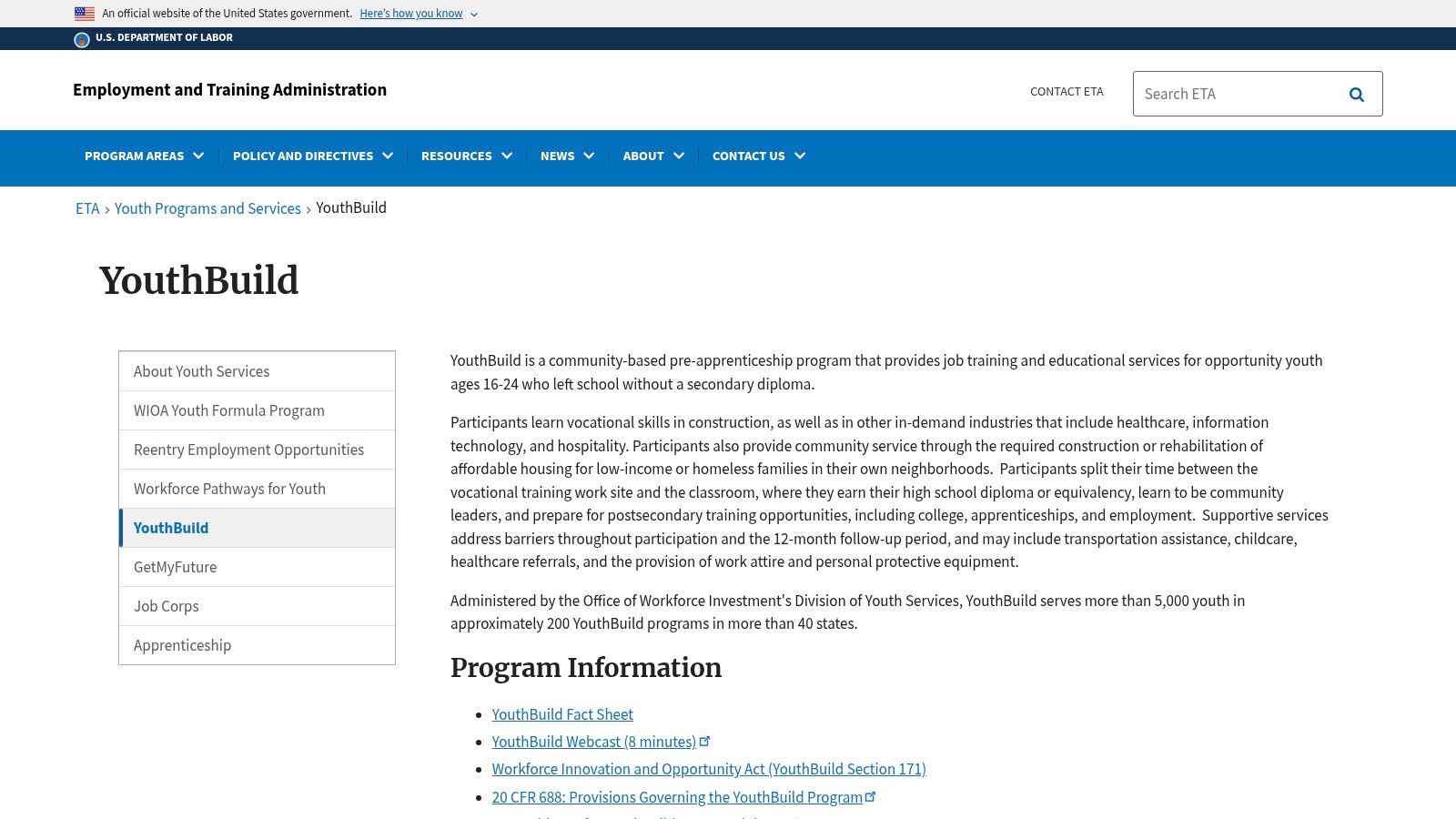
Across federal youth workforce funding, training seats are a minority of total enrollments, and the share shrinks further for younger participants. Most enrolled young people get education, case management, or work experience rather than a seat in an occupational skills track. YouthBuild is the exception worth knowing about. It's a Department of Labor-funded community program for young people generally 16 to 24 who face barriers to employment, and it bundles education, workforce training, and community service into one schedule.
A funded program that doesn't offer your trade isn't an option. It's a waitlist with a brochure.
Construction is a required focus, not a side project: participants build or renovate affordable housing as part of the training. Some local programs add healthcare, information technology, or hospitality tracks, and many add supportive services and leadership development. Because each site is its own grantee, the schedule, the credential offered, and the tracks running this cycle all vary by location.
Ask the local grantee two things before applying: what the education component looks like day to day, and which occupational tracks are running this cycle. If your goal sits outside construction, confirm the local program offers it before you commit a year.
7. Senior Community Service Employment Program (SCSEP)
If you're over 55, out of work, and on a low income, most of this list isn't built for you. SCSEP is.
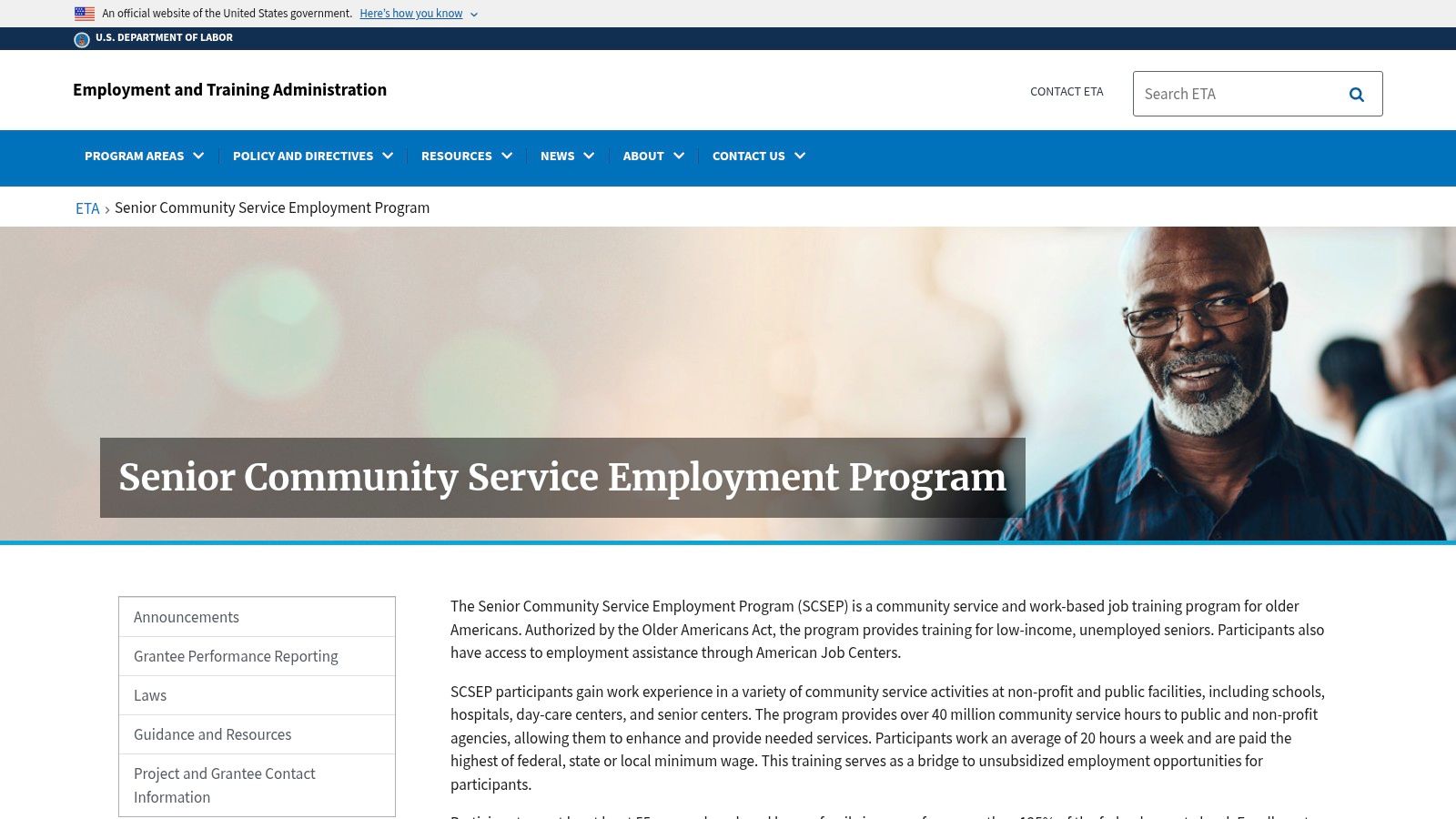
It's a federally funded community service and work-based training program for unemployed adults age 55 and older who meet income criteria. Participants work part time at public or nonprofit host organizations, receive training on the job, and are paid at least the highest applicable federal, state, or local minimum wage. Participation averages about 20 hours a week.
How the placement actually works
You're placed with a host agency, a library, a school, a nonprofit, a senior center, where you do real work and build a recent employment reference. The program pairs that placement with training and employment assistance, including job search help through the program and American Job Centers. The goal is unsubsidized employment, not a permanent subsidized slot.
The honest trade-off is that the placement may have nothing to do with the career you want. It's a bridge: a paycheck, a supervisor, a recent work history, and staff who know local employers. Used that way it works. Treated as a destination, it doesn't.
Three questions worth asking the local program:
- Which host agencies are open near me? Placements are local, and openings turn over quickly.
- What's the individual employment plan? Ask how the placement connects to an actual job goal.
- What are this year's enrollment priorities? Priority rules and local openings both affect who gets in.
Funding caps enrollment, so call early in the program year rather than late.
8. Veteran Readiness and Employment (VR&E)
VR&E is the most counselor-driven option on this list, and that's the whole story of whether it works for you.
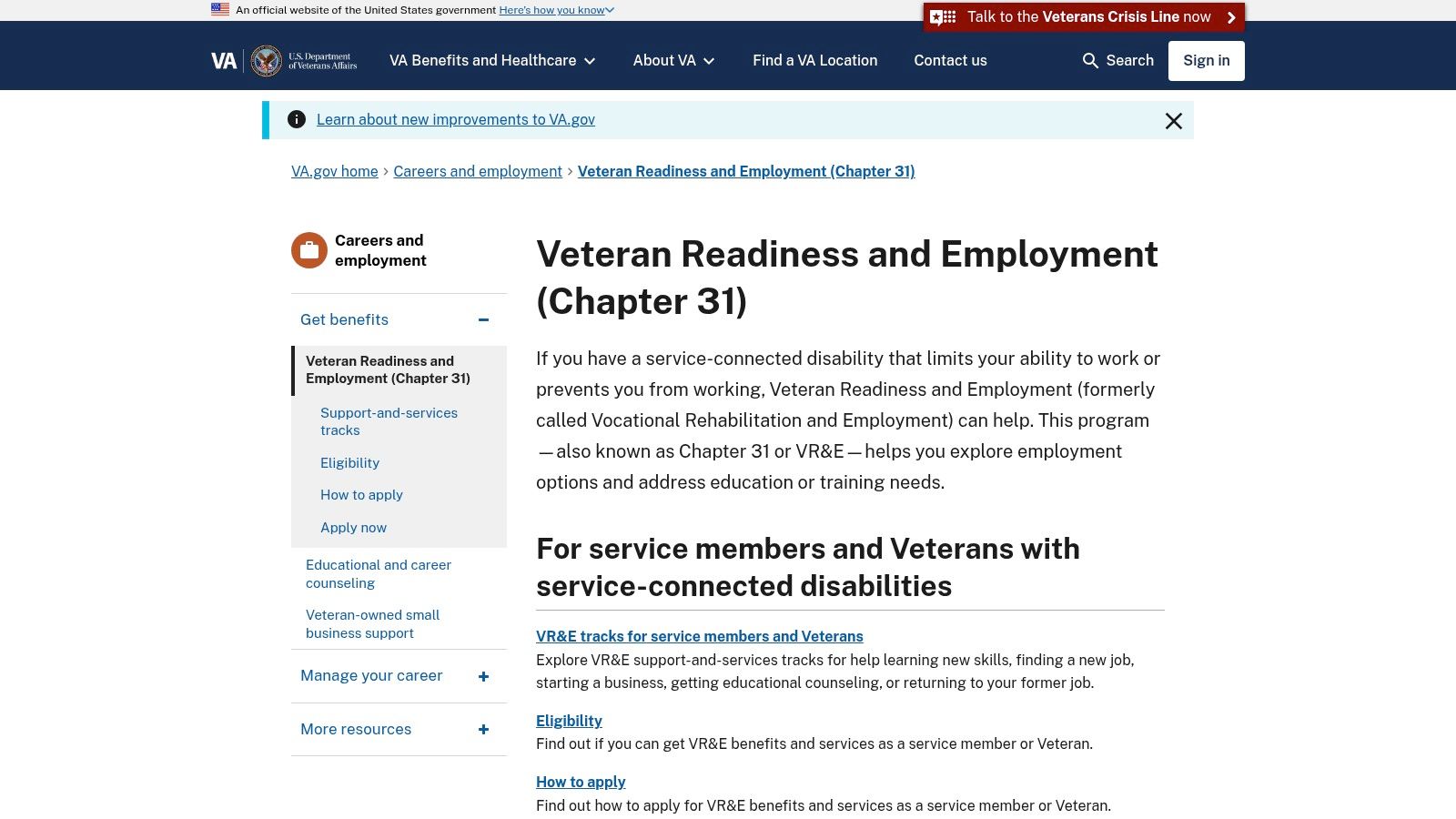
It provides eligible veterans and service members with individualized counseling and employment services. Depending on your needs and the plan your counselor approves, support can include career assessment, job search help, education or vocational training, apprenticeships, and on-the-job training. Eligibility is tied to a service-connected disability and an employment barrier, so it isn't a general training grant with a veteran label on it.
The plan is the gate. A counselor decides which services fit, and training options are constrained by the employment goal written into that plan. Bring evidence, not aspirations: print the job postings you're targeting, the wage range, and the training those postings require. A well-documented goal gets approved quickly. A vague one doesn't get approved at all.
- Get the employment goal in writing early. Every later decision references it.
- Ask what the plan covers. Tuition, fees, tools, and in some cases a subsistence allowance, depending on the approved plan.
- Ask about the review route. If a specific service is turned down, ask how to request a review before you give up.
Capstone's veteran employment programs page covers how transitioning service members practice for federal panel interviews alongside commercial hiring formats.
9. Indian and Native American Programs (INAP)
The hardest rejection to understand is the one where the money exists and nothing near you qualifies.
The OECD's analysis of why adult learning participation stays low puts availability-related barriers, meaning unsuitable courses, inconvenient time or location, missing prerequisites, cancellations, and weak employer support, at a combined 14% of adults. Rural residents are the most likely to report that provision is scarce or inconvenient. The same analysis flags the take-up problem: grants and tax incentives exist and go unused because people don't know about them or find the paperwork too slow.
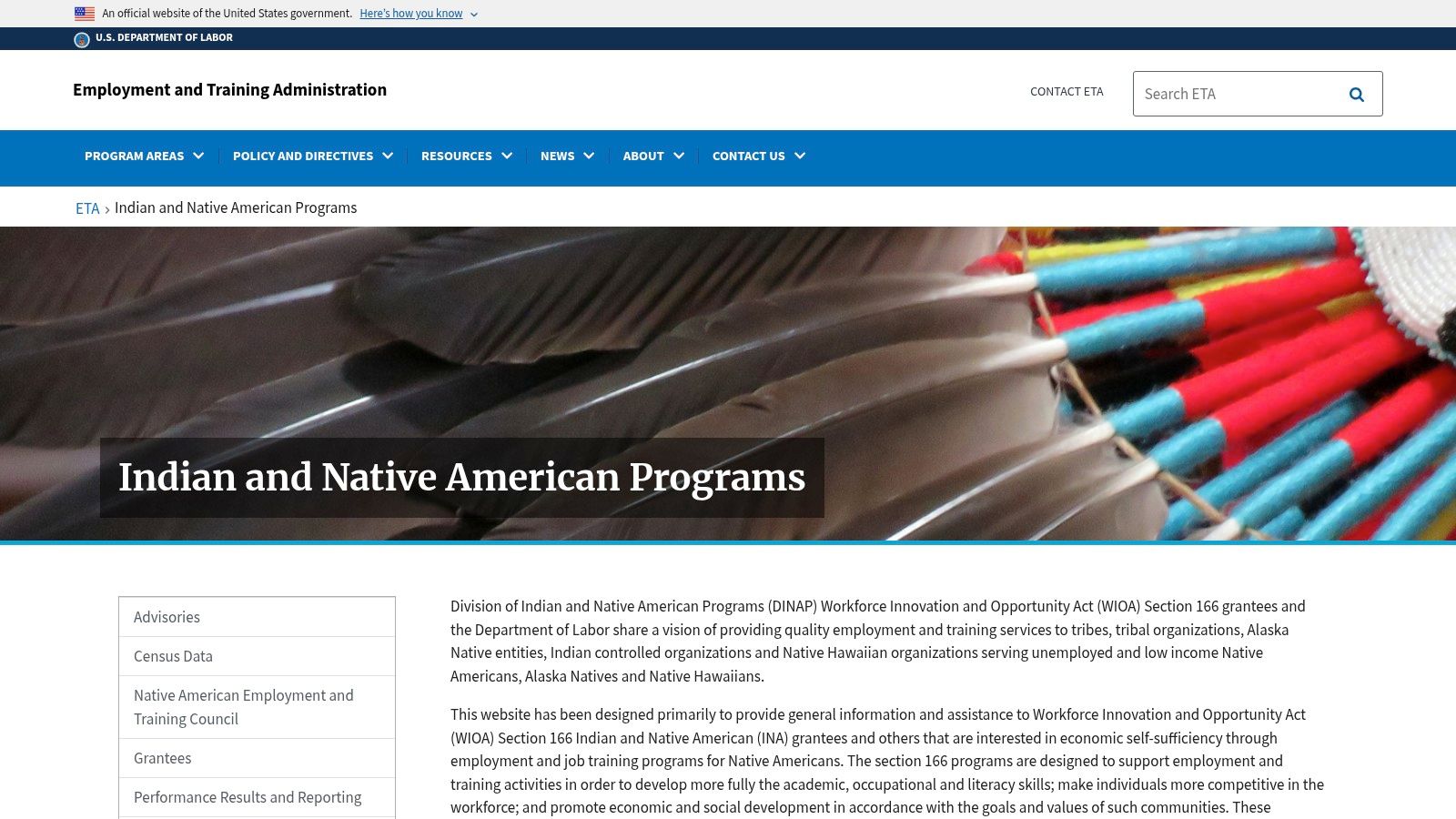
INAP shows why the local layer decides everything. It funds employment and training services for eligible Indian, Alaska Native, and Native Hawaiian individuals, delivered through local grantees rather than a national catalog. Services can include occupational skills training, academic and literacy support, entrepreneurship skills, and employment assistance, but what's running depends on the grantee.
That produces two very different rejections. "Not eligible" is a rule. "Eligible, but no suitable provider" is a capacity problem, and it has different moves: ask the grantee for the current training list, ask whether they can fund a course through a partner institution, and ask whether another grantee in the region runs what you want.
Write it down. When a counselor says no, ask which of the two it is and get the reason in writing. That note is what turns a dead end into a referral.
10. National Farmworker Jobs Program (NFJP)
Eligibility here is the narrowest on the list, and that's the design, not a flaw.
NFJP is a Department of Labor-funded program offering employment and training services to eligible migrant and seasonal farmworkers and certain family members. Local grantees deliver it: career counseling, occupational training, job placement assistance, and support to address employment barriers. Services vary by provider, so your experience depends on which grantee covers your area.
What the grantee controls
The grantee decides which training gets funded and how support services are used, which makes the first conversation the most important one. Ask for the current training list rather than the program brochure, and ask whether they can fund a short licensed course or only classroom programs at partner schools. Ask how family member eligibility works, because the rules for dependents differ from the rules for the farmworker.
Two things this program isn't. It isn't a general training fund open to anyone who has worked a season in agriculture, and it isn't a placement service that hands you a job. It's a funded pathway with a local gatekeeper.
- Bring your work history. Pay stubs, employer letters, and dates of agricultural employment decide eligibility.
- Ask about supportive services. Transportation, housing support, and training-related costs are often available and rarely volunteered.
- Ask who the grantee partners with. Community colleges and employers connected to the grant can open slots the brochure never mentions.
If you don't qualify, ask the grantee for a referral to the American Job Center. They serve overlapping populations and often know which door is open.
10 Government Funded Training Programs at a Glance
The table below covers the nine public programs. Capstone Workforce is private preparation software for practice and reporting, not a funding source or eligibility decision.
| Who It Serves | Training Type | Paid While Training | Where to Start |
|---|---|---|---|
| Adults and dislocated workers seeking local career or training services | Employment services and assistance with approved occupational training | Not guaranteed; set by the local board | American Job Centers |
| Eligible young adults ages 16–24 | Academic instruction and career technical training | Not guaranteed; ask the center about living supports | Job Corps |
| People seeking occupation-specific, employer-linked training | Paid work, supervised on-the-job learning, and classroom instruction | Yes; apprentices earn wages | Apprenticeship.gov |
| Eligible SNAP participants | Employment services, skills training, and work experience | Not guaranteed; set by the state E&T provider | SNAP Employment and Training |
| Eligible young people, generally ages 16–24, who face employment barriers | Education, workforce training, and community service, with a construction focus | Stipends may be available; set by the local grantee | YouthBuild |
| Eligible low-income, unemployed adults age 55 and older | Part-time community-service work placements and training | Yes; at least the highest applicable minimum wage | SCSEP |
| Eligible veterans and service members with service-connected disabilities and employment barriers | Individualized employment services and approved education, vocational training, or work-based learning | Subsistence allowance may be available under an approved plan | Veteran Readiness and Employment |
| Eligible Indian, Alaska Native, and Native Hawaiian individuals | Local occupational, academic, literacy, and employment services | Not guaranteed; set by the local grantee | Indian and Native American Programs |
| Eligible migrant and seasonal farmworkers and certain family members | Local employment services, occupational training, and job placement support | Not guaranteed; set by the local grantee | National Farmworker Jobs Program |
Read the paid column as a screening tool, not a promise. Apprenticeship and SCSEP build pay into the model, VR&E can include support only inside an approved plan, and the local programs usually leave money questions to the board or grantee.
Your Next Step Is to Verify Eligibility Before You Spend a Dollar
The order matters more than the program you pick. People who get funded usually did three things before paying a deposit: confirmed which program fits their situation, got a specific answer on funding availability, and put the approval in writing.
Start with the match. Unemployed or underemployed and 18 or older, the American Job Center and WIOA Adult route is the widest door. Lost a job, ask specifically about Dislocated Worker funds. Between 16 and 24, look at Job Corps and YouthBuild before anything else. Over 55 and low income, SCSEP. A veteran with a service-connected disability and a barrier to work, VR&E. Receiving SNAP, ask about E&T. Native American or Alaska Native, contact an INAP grantee. Farmworker background, NFJP. Want to be paid while you learn, find a registered sponsor.
Then make the call. Ask three questions in this order: is my course on the Eligible Training Provider List, is there money available now, and when is the next funding decision made. A yes on the list with no current allocation means waitlist, not enrollment. A training provider can be approved on paper and still be a dead end if the local board has already committed the year's funds.
Before you sign anything: get the funding decision in writing, including the amount approved and the start date it covers.
Prepare for the assessment. These programs usually route you through an intake interview, a skills assessment, or a counselor review before anything is approved, and that meeting is where applications live or die. Bring ID documents, income documentation, work history, and one specific target occupation with its training requirement written down. “I want something in healthcare” gets you a career services workshop. “I want to be a CNA at this employer at this wage, and here is the approved program” gives the counselor something fundable.
Preparation tools help with the parts you control: researching WIOA options, building exam-ready skills for a CNA, CDL, or phlebotomy test, and organizing your application before the appointment. That work is worth doing, but do not mistake it for approval. The local workforce board makes the final eligibility and funding call, not a software provider, and no guide can shortcut that decision.
Smaller programs follow the same logic: an eligibility list, a provider list, a deadline. Even outside workforce funding, the pattern holds; the Georgia driver education scholarship criteria are checked before an application, not after. For training money, the discipline is identical: criteria first, provider status second, signature last.
Keep a folder whatever happens. Every notice, every approval letter, every denial with the stated reason. Funding levels shift year to year, and a documented file is what lets you reapply fast when money opens up.
Capstone Workforce covers the preparation side the funding system leaves to you: free WIOA guides that trace every figure back to a federal, state, or local workforce board document, written and practical exam practice for CNA, CDL, and phlebotomy, and scored interview coaching you can run the night before intake. Use it to walk into your American Job Center knowing which program fits, what your course needs to be listed as, and what you will say when the counselor asks about your employment goal. Start at Capstone Workforce and keep the funding decision where it belongs, with your local board.